

女性植毛|英語
2026.11.01
WOMEN’S HAIR TRANSPLANT
For women
Hair transplantation
Hair transplantation moves your own follicles from the back or sides of the head to areas such as the hairline, part or crown. We assess your natural hair direction and facial features when planning the treatment area and design.
Suitability, the number of grafts required and the changes that can be expected vary. At consultation, the doctor examines the donor and recipient areas to determine whether treatment is appropriate.

About Treatment
About hair transplantation
Rather than implanting artificial hair, this treatment relocates your own hair in follicular units. Harvested follicles are transplanted to areas judged to need treatment, such as the hairline or crown.
Harvested from the back or sides
Grafts containing hair follicles are mainly harvested from the back or sides of the head. One graft may contain more than one hair.
Relocating your own hair
Hair transplantation moves hair from a donor area to a recipient area. The donor area loses the amount of hair removed, so the amount that can be harvested is limited.
Planning direction and density
The doctor assesses hair direction, angle, existing hair and donor hair quality when planning the recipient area and density.

It does not completely recreate the original hair density. Results depend on donor hair quality and the number of grafts available. Hair transplantation also does not stop thinning of existing hair that has not been transplanted.
Concerns and Areas
Concerns about the hairline, part or crown
Each woman’s concerns differ. The doctor assesses the type of hair loss, donor area and desired coverage to determine whether transplantation is an option.
Hairline & temple recession
We assess facial features and existing hair direction when planning treatment for a receding hairline, temple recession or forehead shape.
Part & crown
Suitability can be difficult to determine in the part or crown, depending on existing hair density and direction and the progression of hair loss.
Hair loss from traction or scarring
Transplantation may be considered for hair loss caused by chronic traction or scars from injury, surgery or burns. Graft survival in scar tissue may be lower than in normal scalp.
With diffuse thinning, hair density may also be reduced in the donor area. Other treatments may take priority for active hair-loss conditions such as alopecia areata, or when there is insufficient donor hair.
Treatment Menu
Four treatment options for different concerns
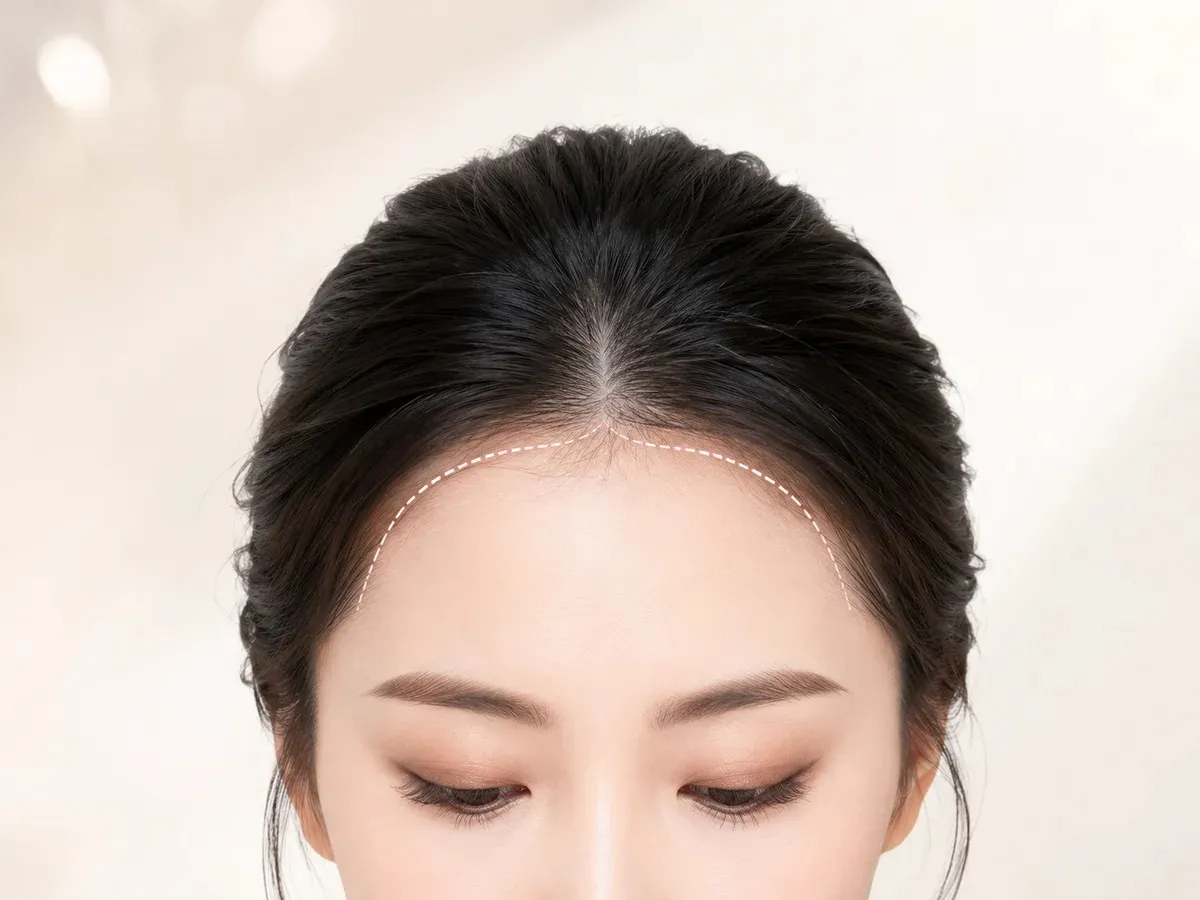
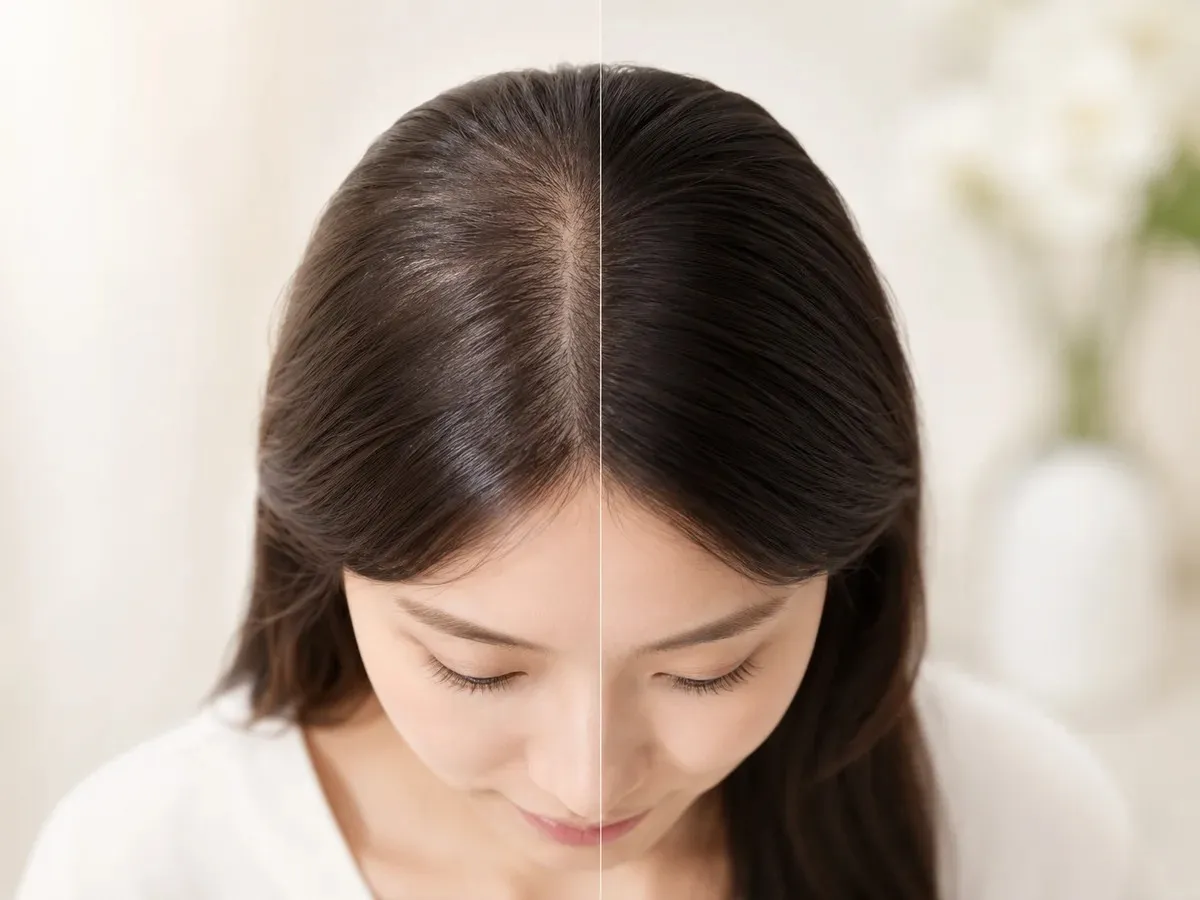
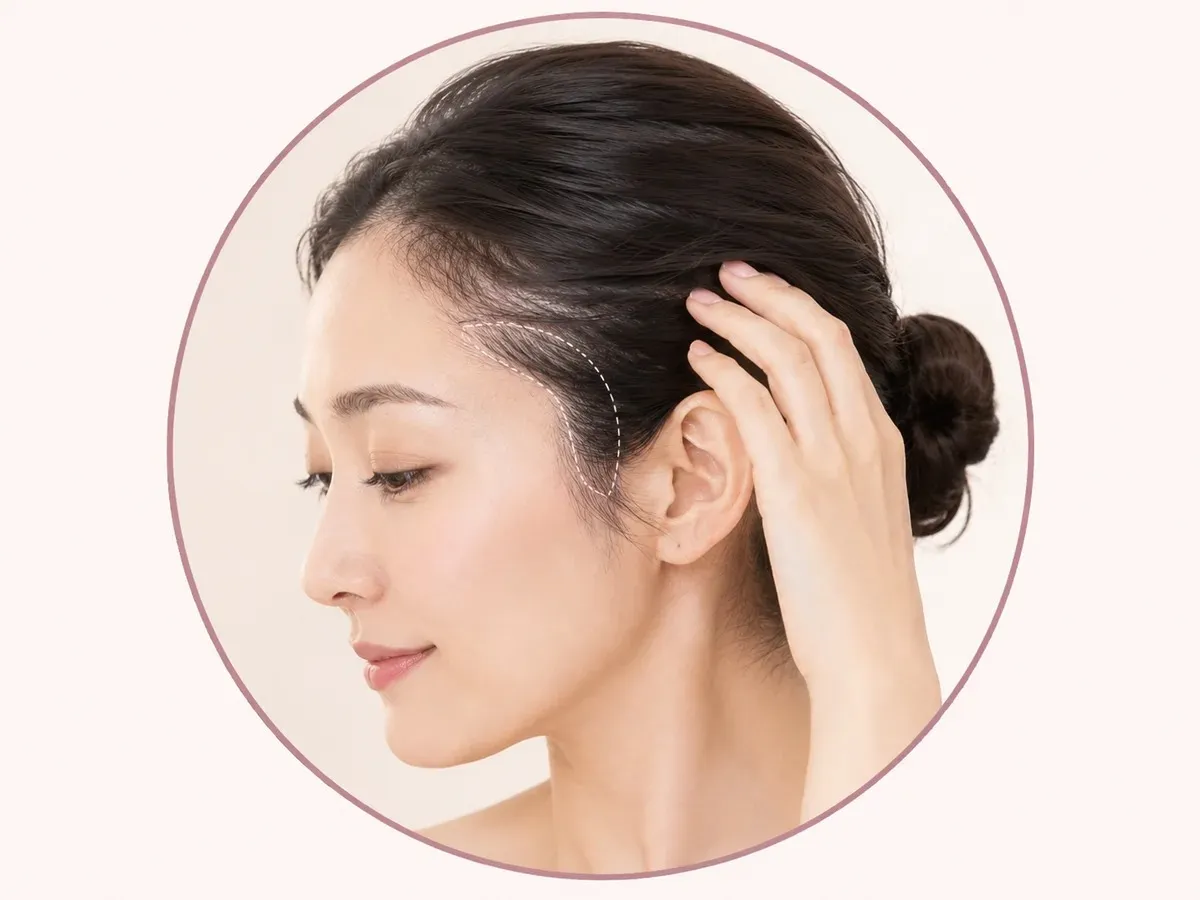
Our options address areas such as the hairline, visible scalp along the part and scars. At consultation, the doctor examines the scalp and donor area to determine suitability, treatment area and approximate graft count.

Face Balance
Hairline design to suit your features
For a Face-Frame Transplant, we assess forehead height and width and the transition to the temples when planning a hairline that suits your features and preferences.
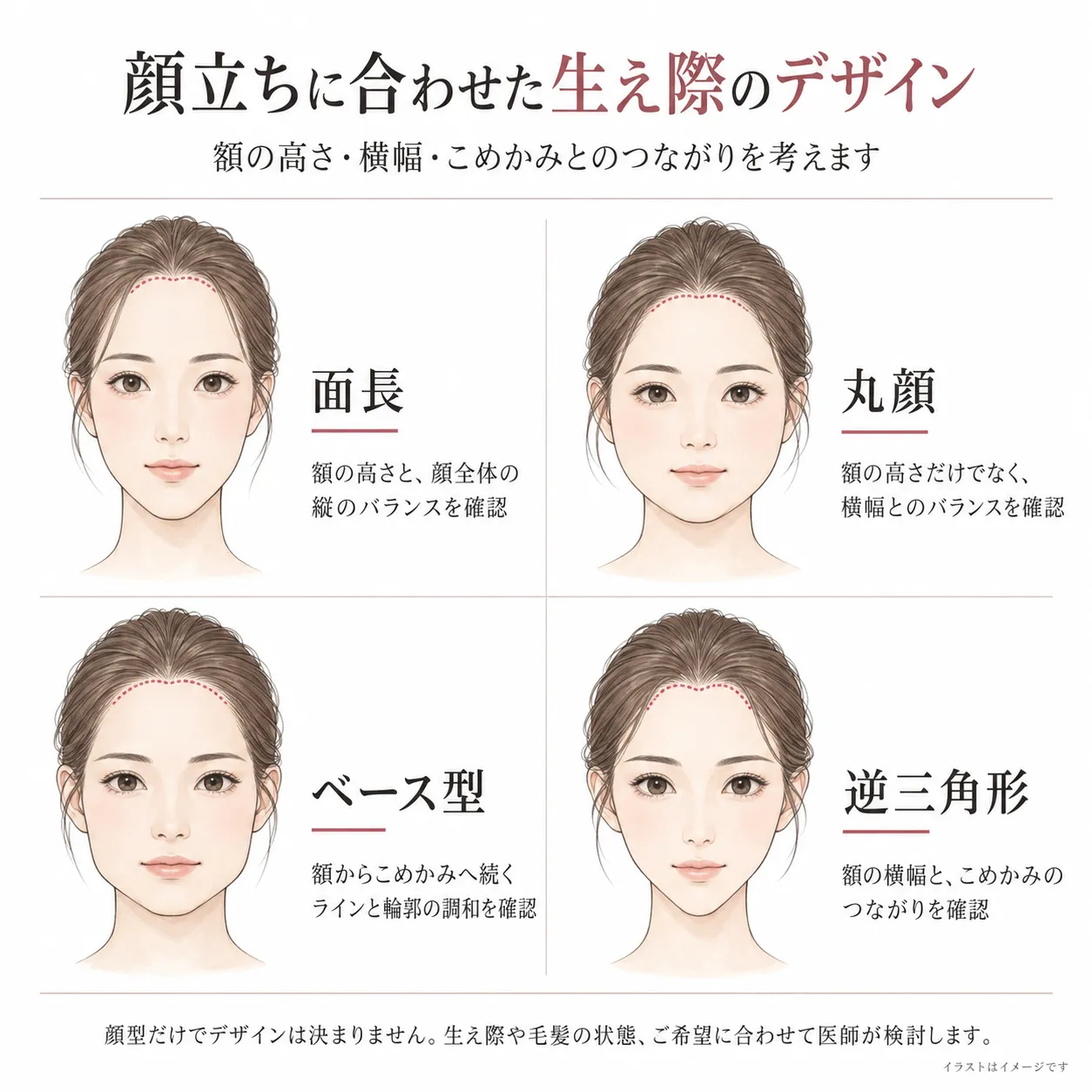
Long face
Assessing forehead height and the vertical balance of the face.
Round face
Assessing both forehead height and width.
Square face
Assessing the line from the forehead to the temples and its harmony with the facial outline.
Inverted triangle
Assessing forehead width and its transition to the temples.
Face shape alone does not determine the design. The doctor considers the hairline, hair condition and your preferences. Illustrations are conceptual; dotted lines do not indicate the treatment area or result.
Surgical Method
Our techniques
We combine FUE and DHI techniques to limit the physical burden during surgery and aim for results that respect natural hair direction.
FUE
A dedicated punch instrument harvests follicles (grafts) individually from the back of the head. It does not remove a strip of scalp, but small dot-like scars remain in the donor area.
At the hairline, recipient sites are created with hair direction and density in mind, then the harvested grafts are placed.
DHI
Harvested follicles are loaded into a special pen-shaped implanter, allowing recipient-site creation and graft placement to occur together.
In areas such as the crown, transplantation considers existing hair and its direction. The doctor selects the technique according to the recipient area and scalp condition.

Procedure
The basic transplantation process
Graft harvesting
Grafts containing follicles are harvested in follicular units from the back or sides of the head. Shaven and non-shaven donor-area methods are available.
Creating recipient sites
Holes or slits are created while considering hair direction, angle and density.
Graft placement
Harvested grafts are placed while minimizing damage. With DHI, recipient-site creation and placement occur together.
Hairline Design
What matters for natural-looking results
Results are not determined by graft count alone. Planning considers donor hair thickness and curl, placement angles, density distribution and existing hair.
Fine grafts at the hairline
Single-hair grafts may be used at the front edge, with multi-hair grafts placed farther back.
Adjusting direction and angle
Placement angles follow existing hair and whorl direction. In areas with existing hair, it may be difficult to create recipient sites while completely avoiding those hairs.
There is a limit to density
Reference figures indicate 70–100 follicular openings/cm² in Asian hair and a maximum transplantation density of approximately 50 grafts/cm² in one procedure. Density is determined with scalp blood flow and graft thickness in mind.
Cases
Women’s hair transplantation: cases & progress
These cases show different treatment areas, including the hairline, part and crown. Final results take time, and temporary shedding of transplanted hair or shock loss may occur during recovery.
Woman in her 30s | Hairline & crown transplant
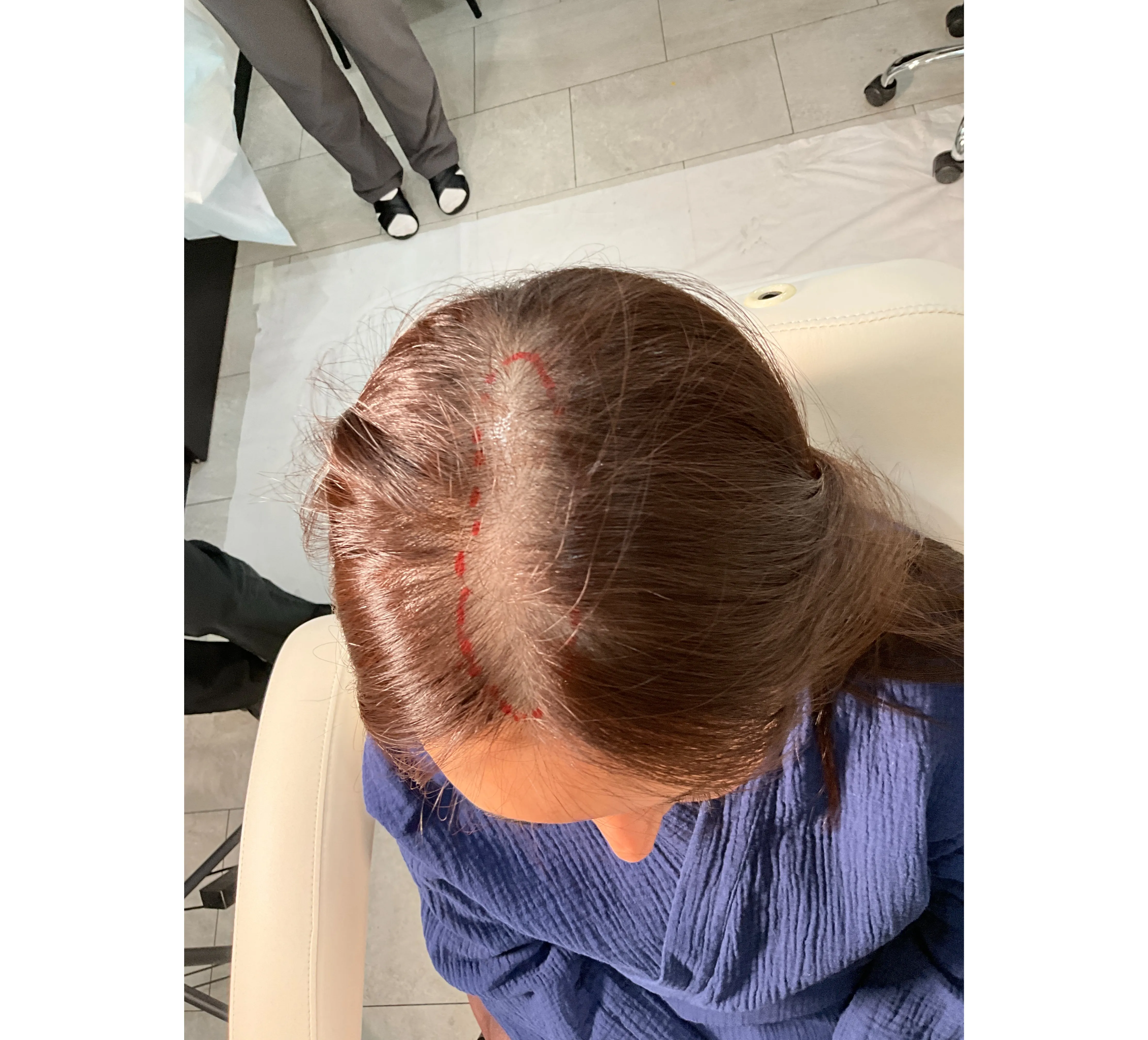
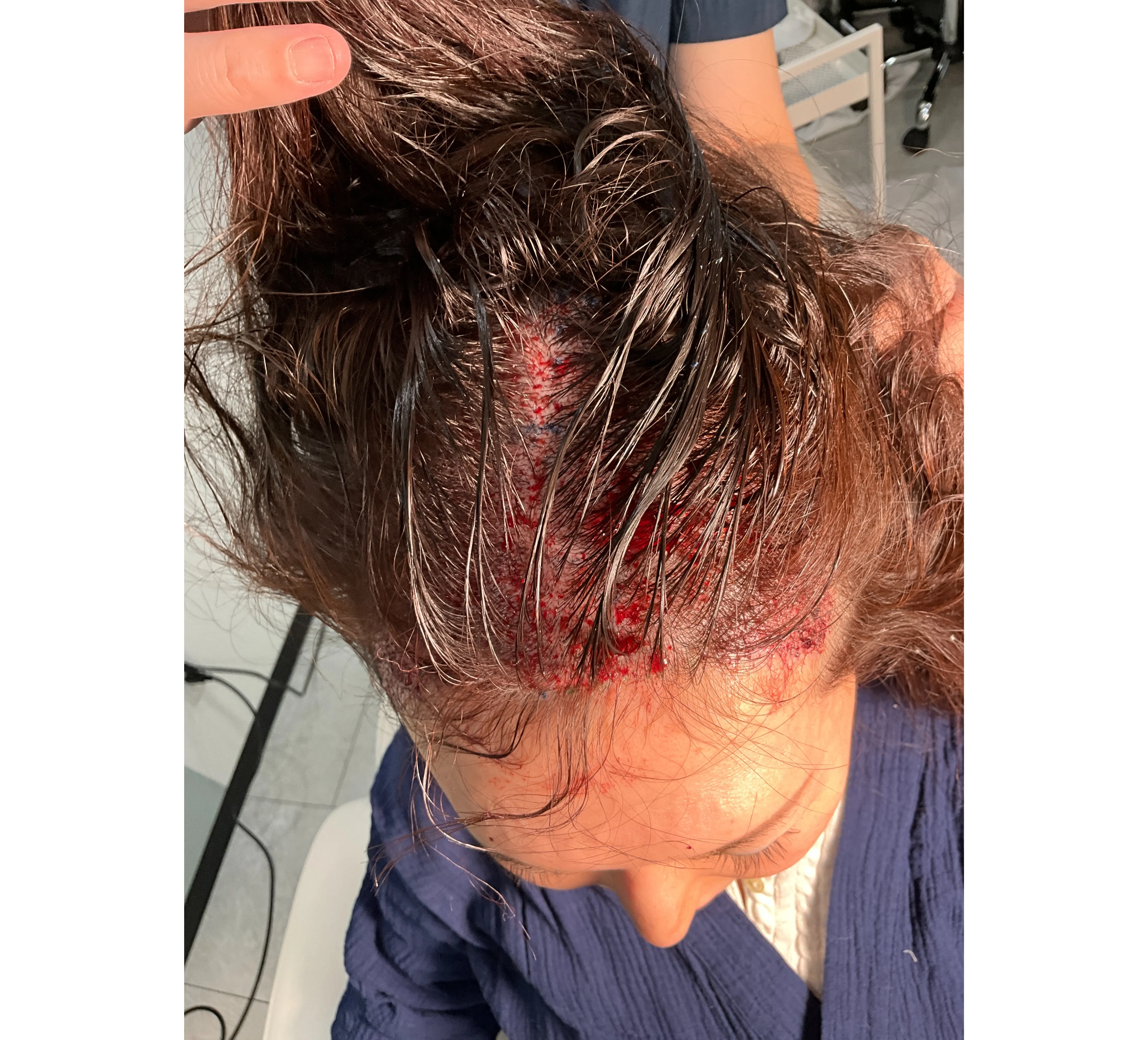
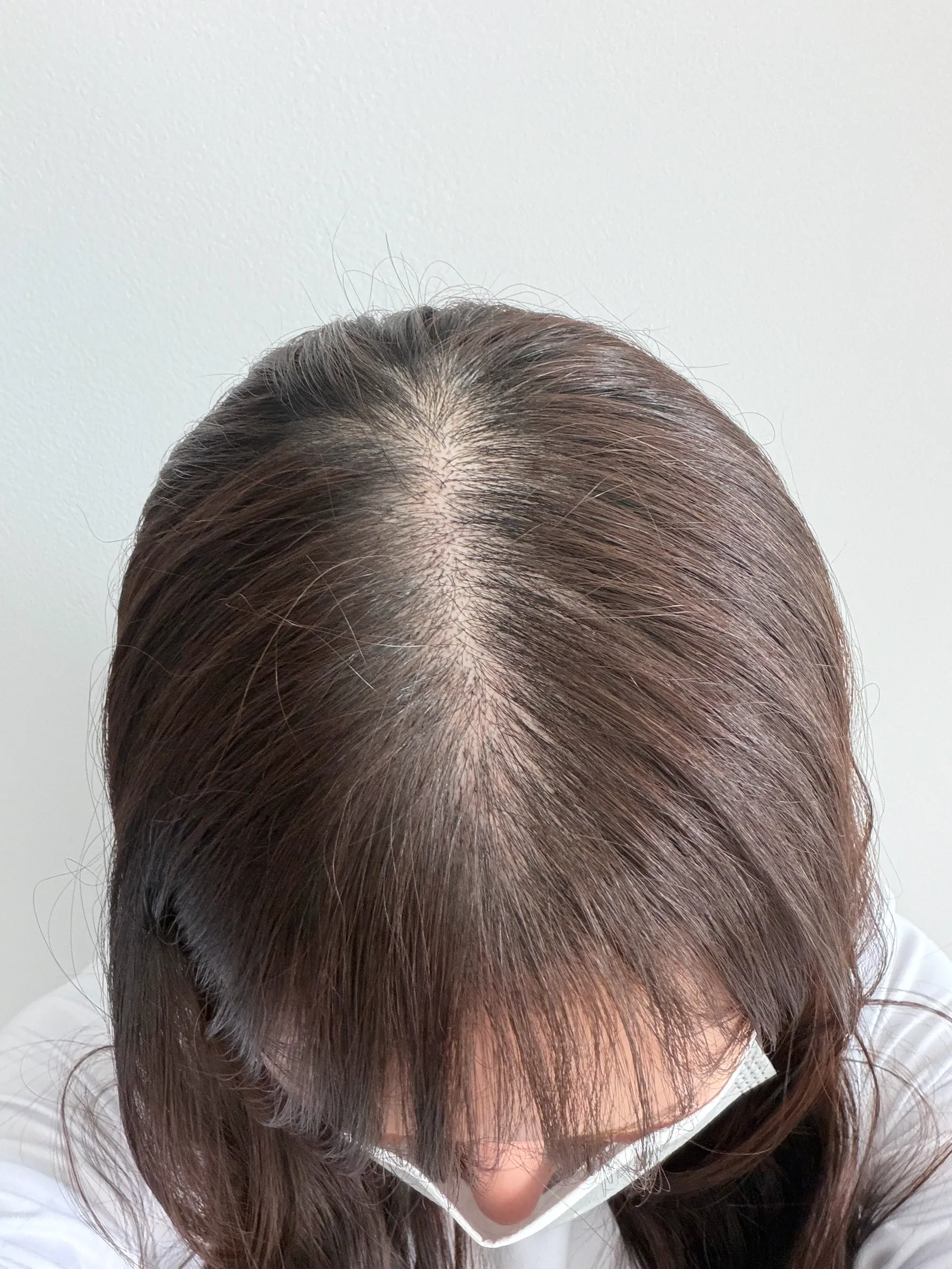
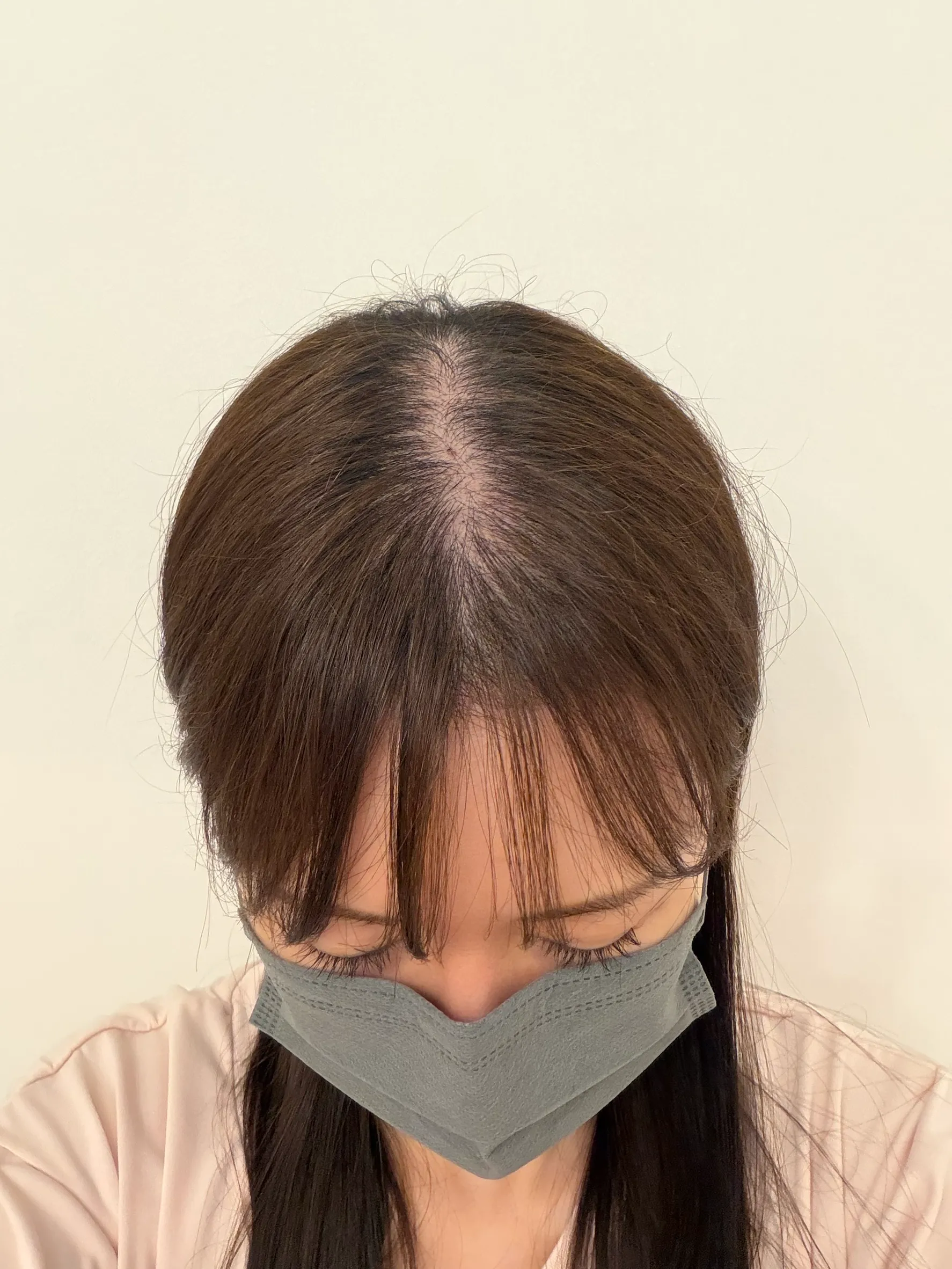
- Treatment area
- Hairline & crown
- Techniques
- DHI
- Number of grafts
- Approx. 1,500–2,000 grafts
- Treatment fee
- ¥825,000 (tax included)
- Treatment
- Hair transplantation: follicles harvested from the back and sides of the head and transplanted to the hairline and crown.
- Main risks & side effects
- Pain, bleeding, swelling, redness, itching, changes in sensation, scarring, folliculitis, infection, temporary shedding, shock loss, poor graft survival, asymmetry or uneven density, and reduced donor-area hair volume.
Woman in her 50s | Crown & part transplant
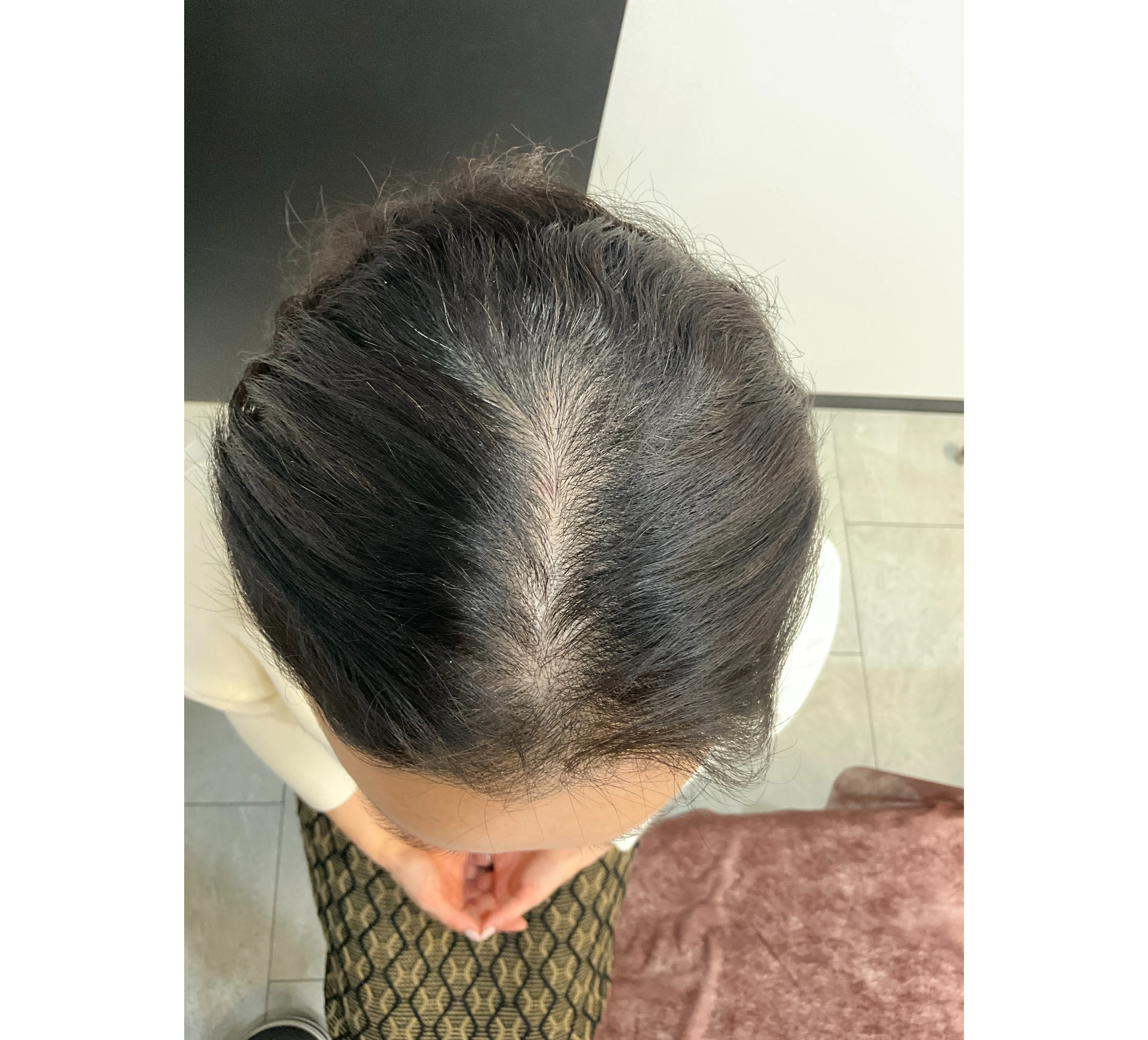
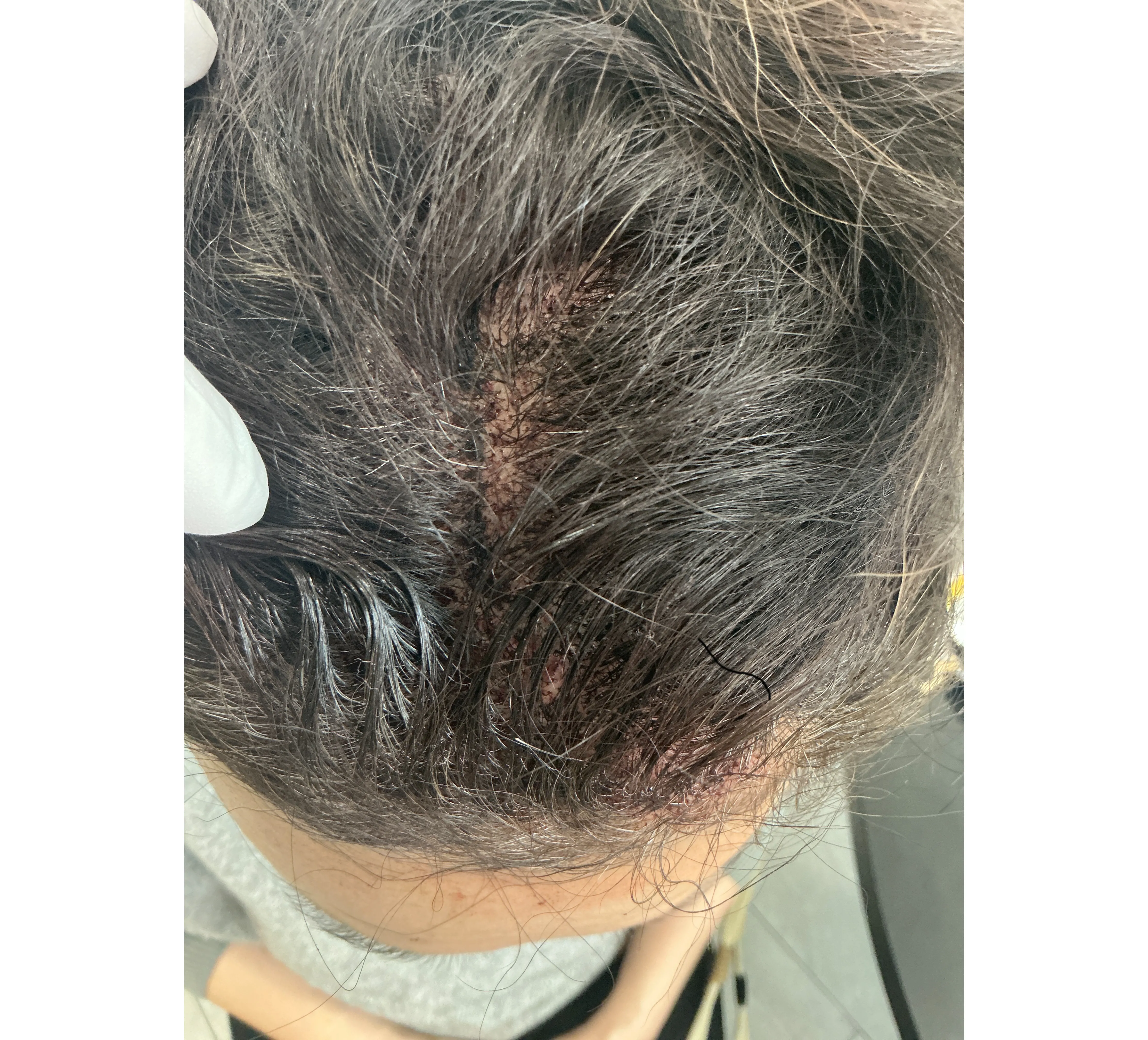
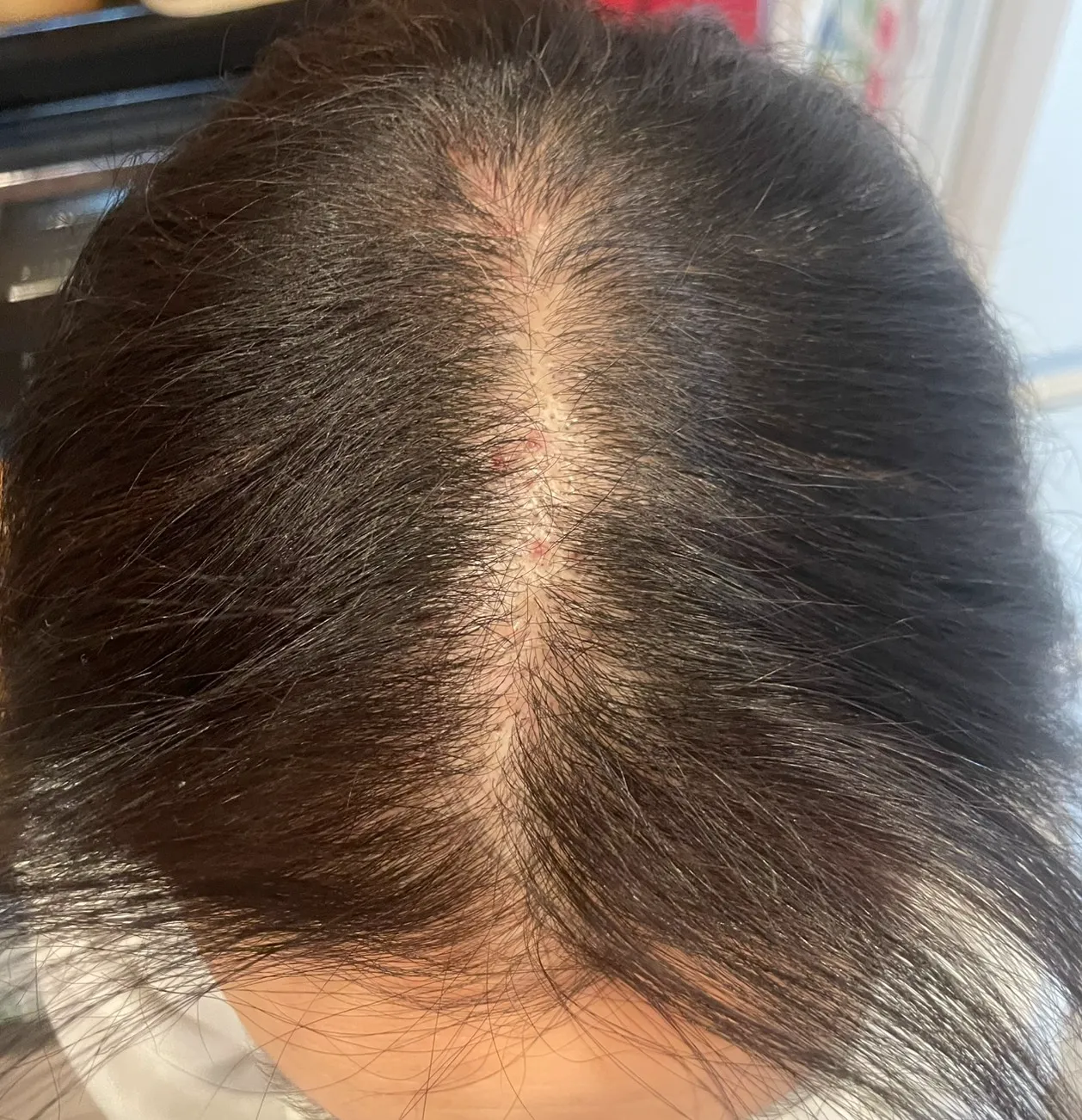
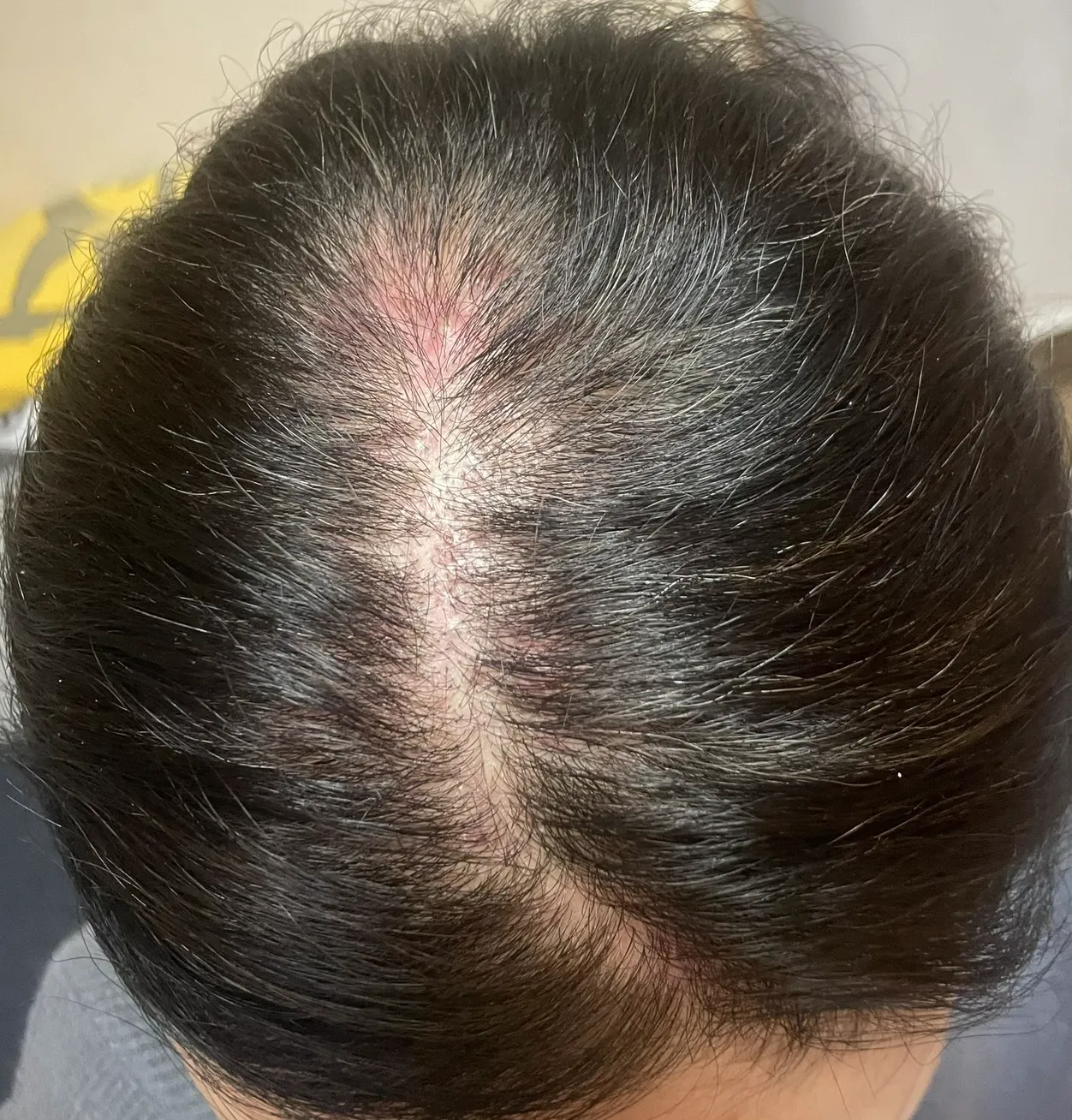
- Treatment area
- Crown & part
- Techniques
- DHI
- Number of grafts
- Approx. 1,500 grafts
- Reference price (current)
- From ¥990,000 (tax included)The current Top-Up Volume Transplant price is shown for reference.
- Treatment
- Hair transplantation: follicles harvested from the back and sides of the head and transplanted to the crown and part.
- Main risks & side effects
- Pain, bleeding, swelling, redness, itching, changes in sensation, scarring, folliculitis, infection, temporary shedding, shock loss, poor graft survival, asymmetry or uneven density, and reduced donor-area hair volume.
Woman in her 50s | Part & crown transplant
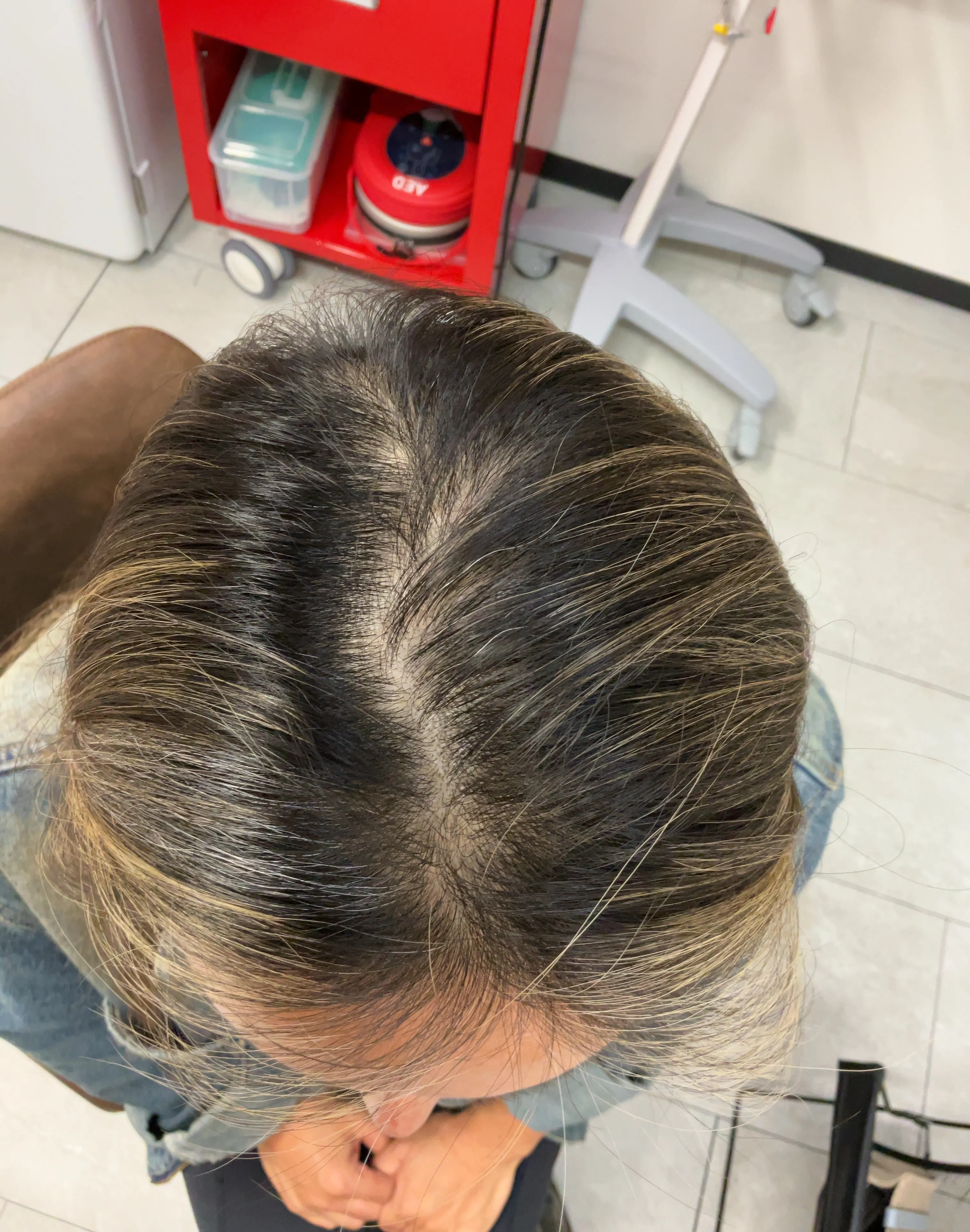
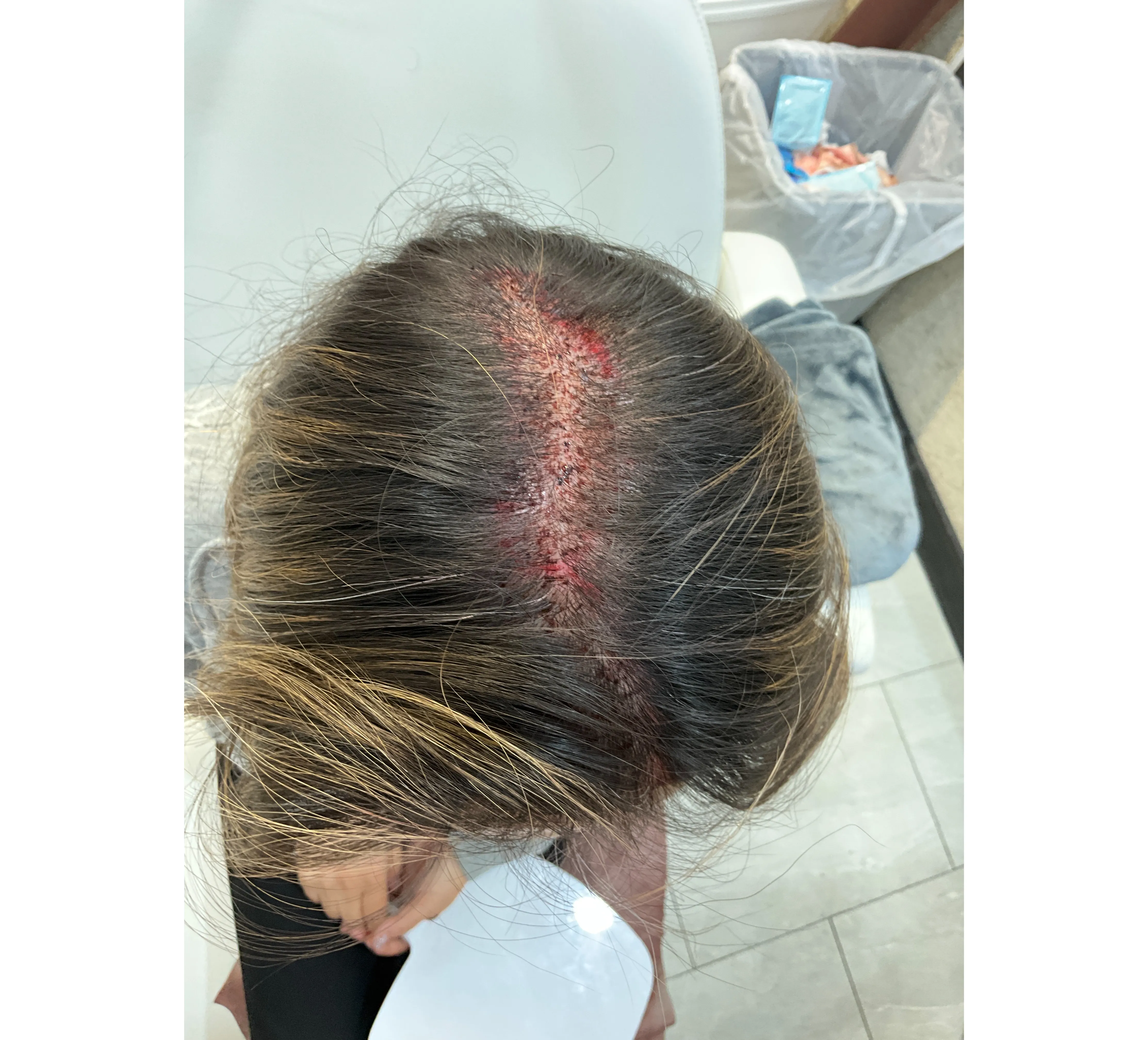
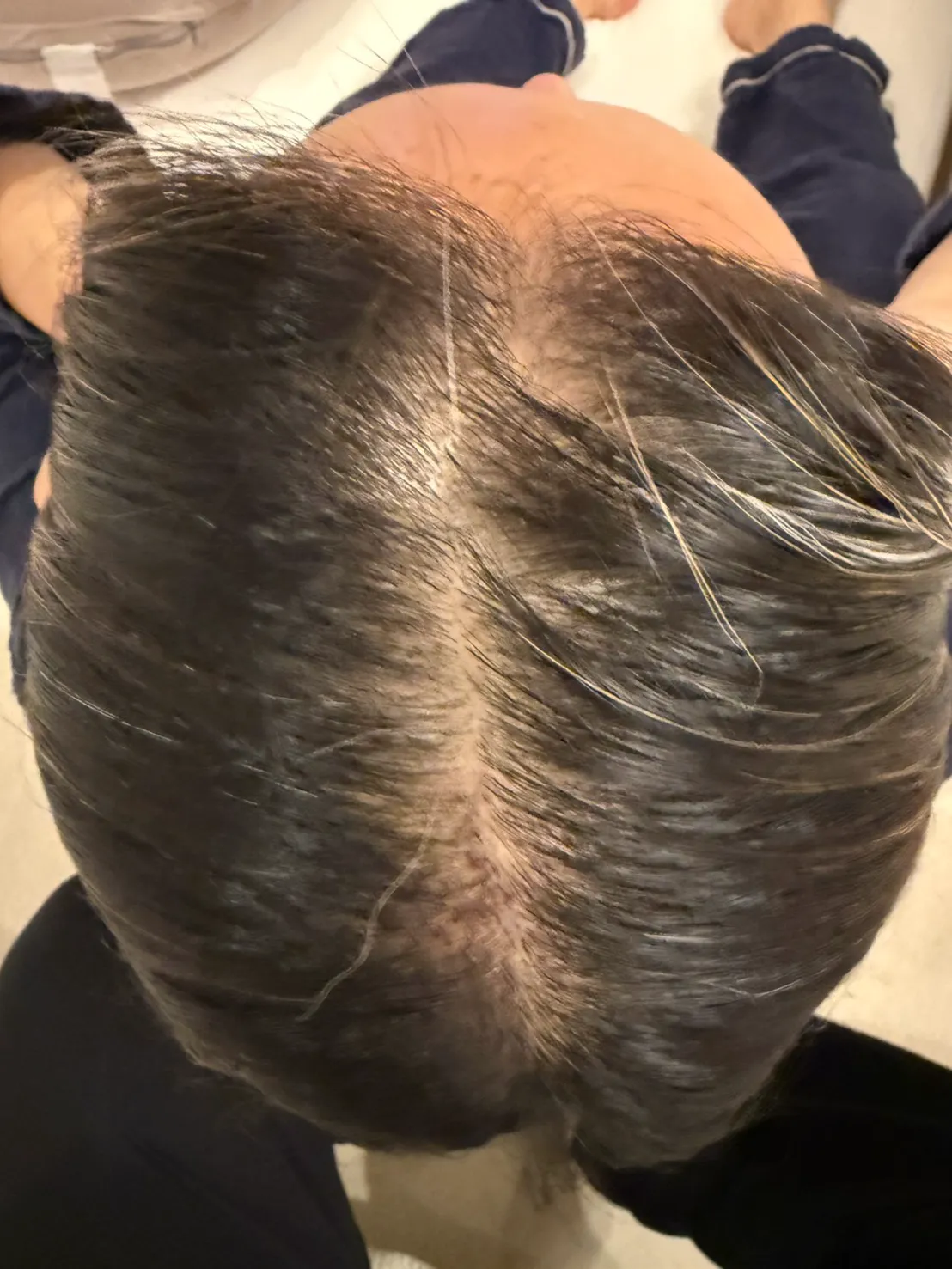
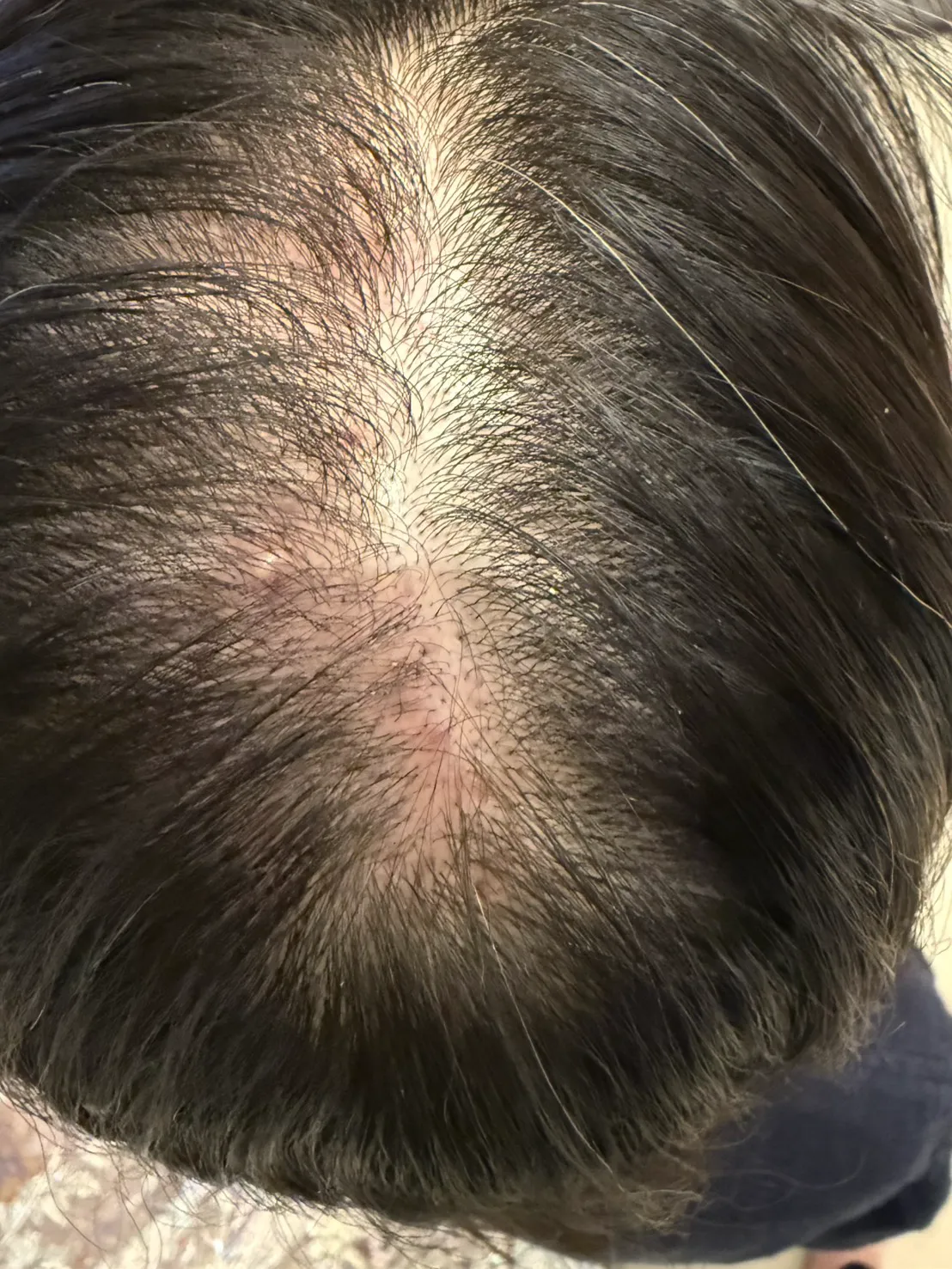
- Treatment area
- Part & crown
- Techniques
- DHI
- Number of grafts
- Approx. 1,000 grafts
- Reference price (current)
- From ¥990,000 (tax included)The current Top-Up Volume Transplant price is shown for reference.
- Treatment
- Hair transplantation: follicles harvested from the back and sides of the head and transplanted to the part and crown.
- Main risks & side effects
- Pain, bleeding, swelling, redness, itching, changes in sensation, scarring, folliculitis, infection, temporary shedding, shock loss, poor graft survival, asymmetry or uneven density, and reduced donor-area hair volume.
* Photos show each patient’s treatment progress. Results, timing of hair growth, graft survival, scars and downtime vary.
* Prices for CASE 02 and 03 are references based on the current price list and may differ from the actual treatment fees at the time.
Design & Treatment
Design & treatment scenes
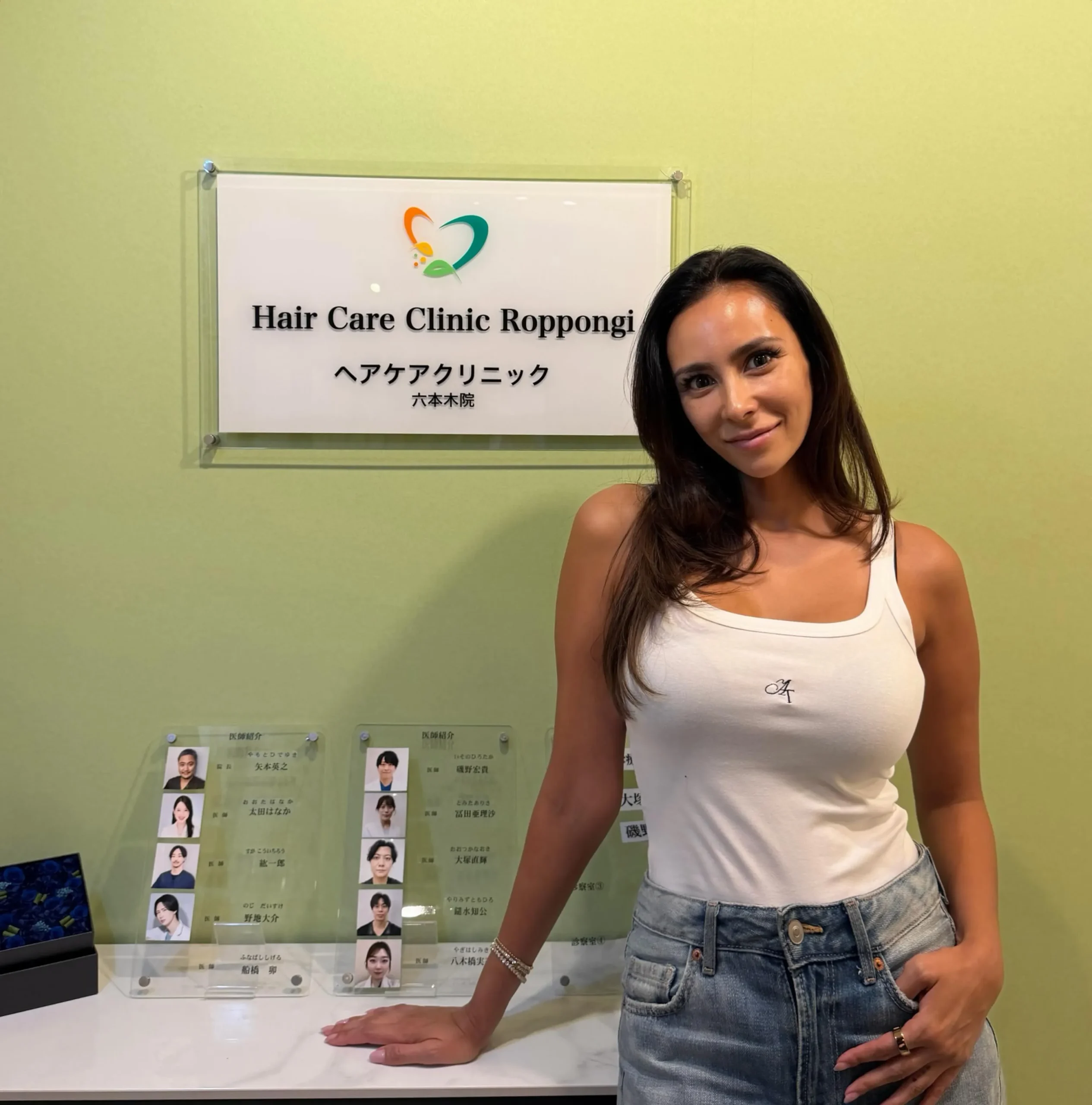
A look at clinic visits, design and treatment-related scenes at our clinic.
These photographs do not indicate final results or recovery time.
MALIA.
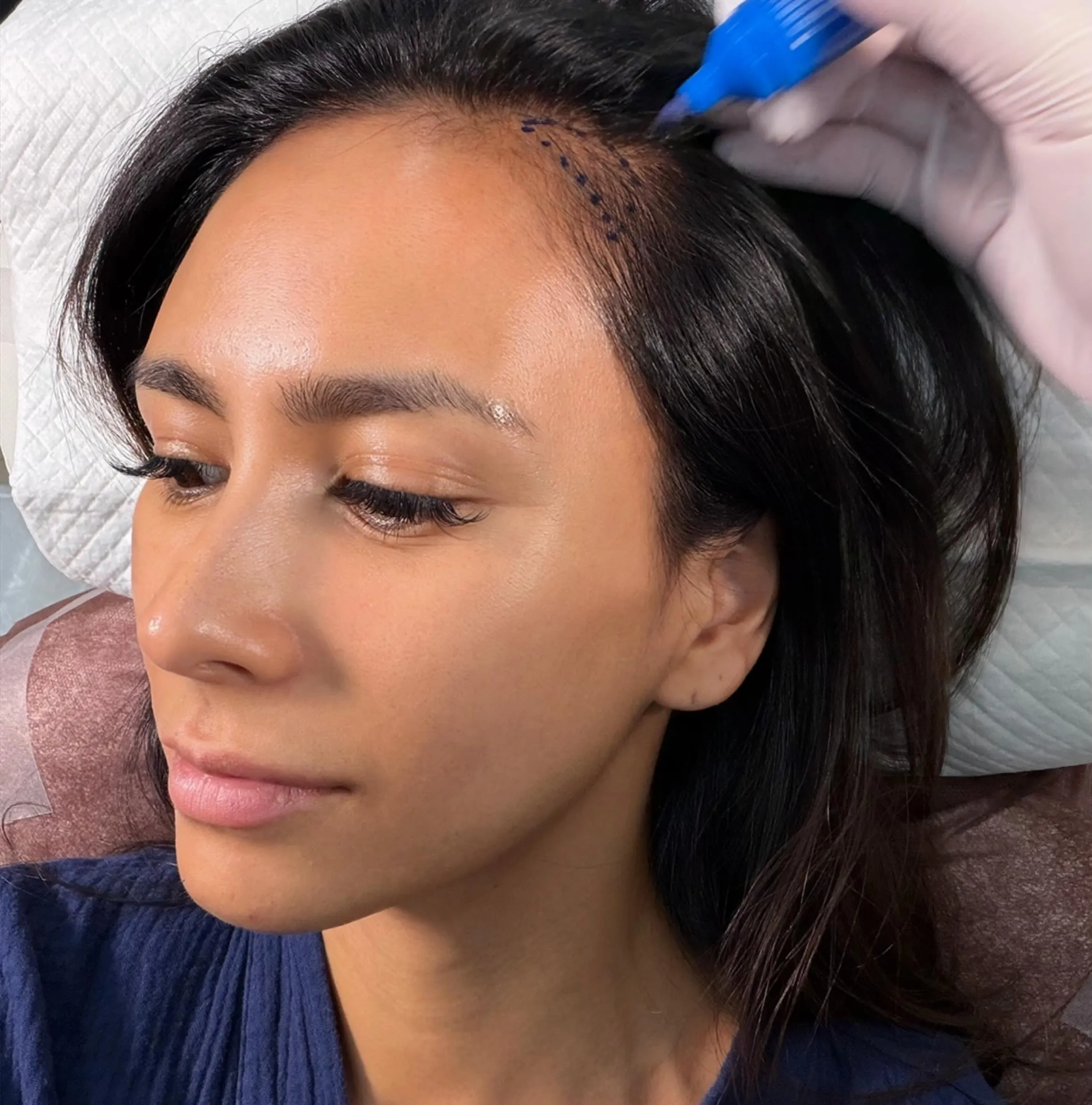
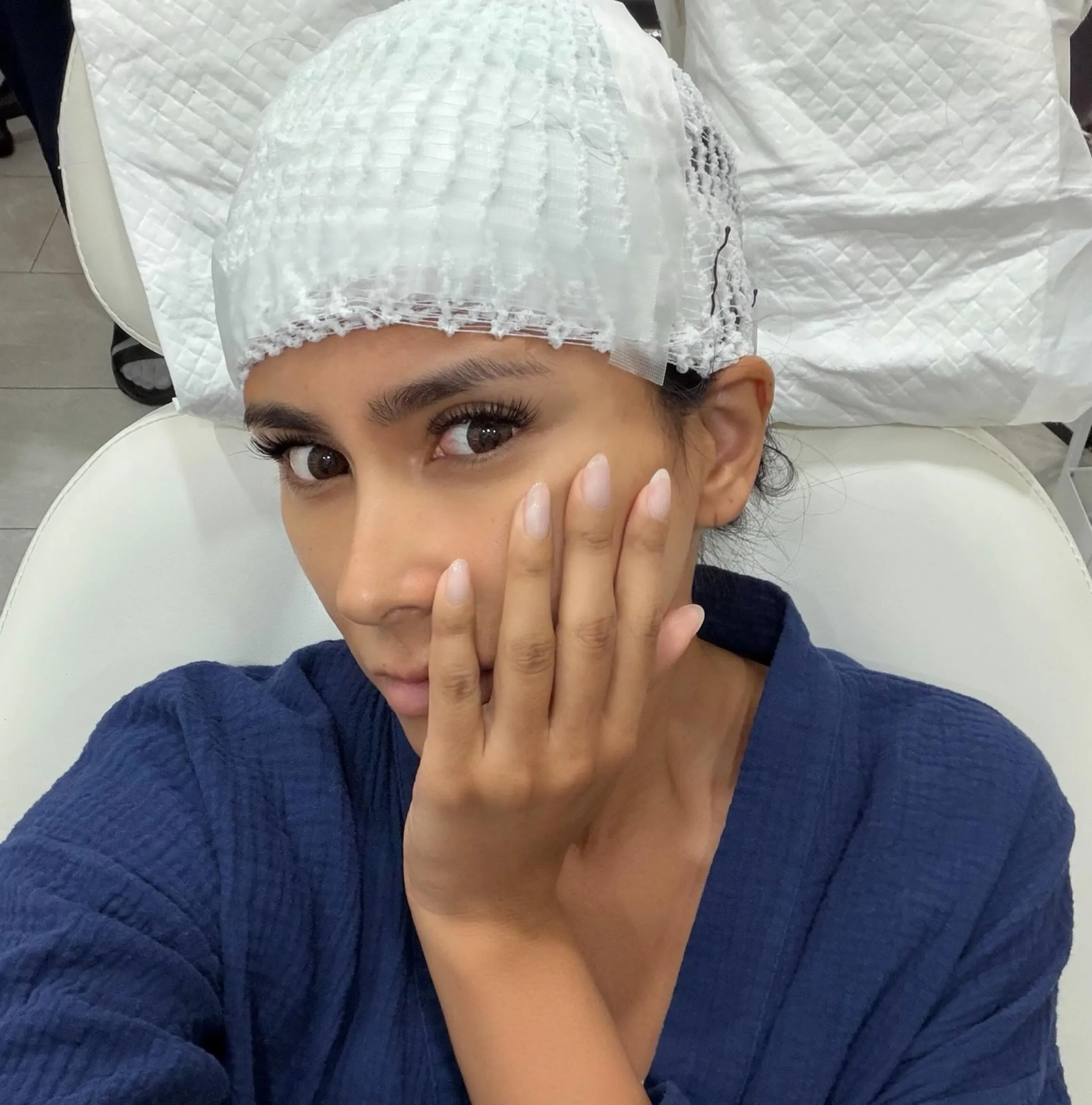
Emi Hasegawa
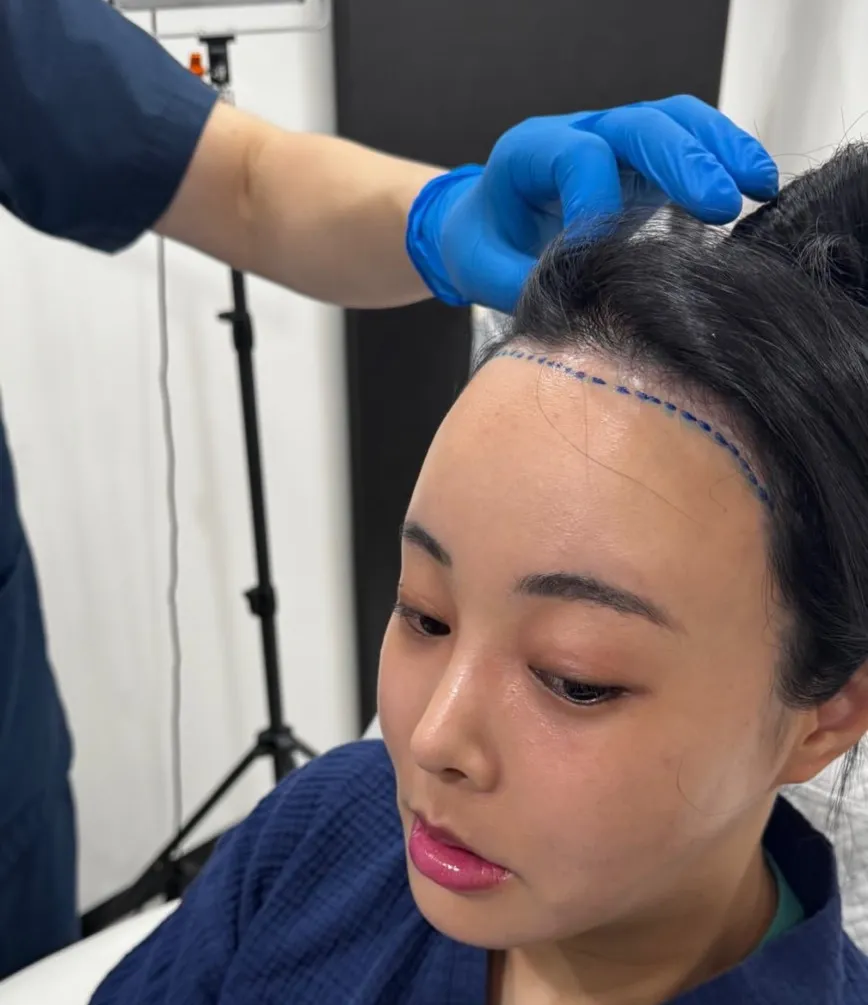
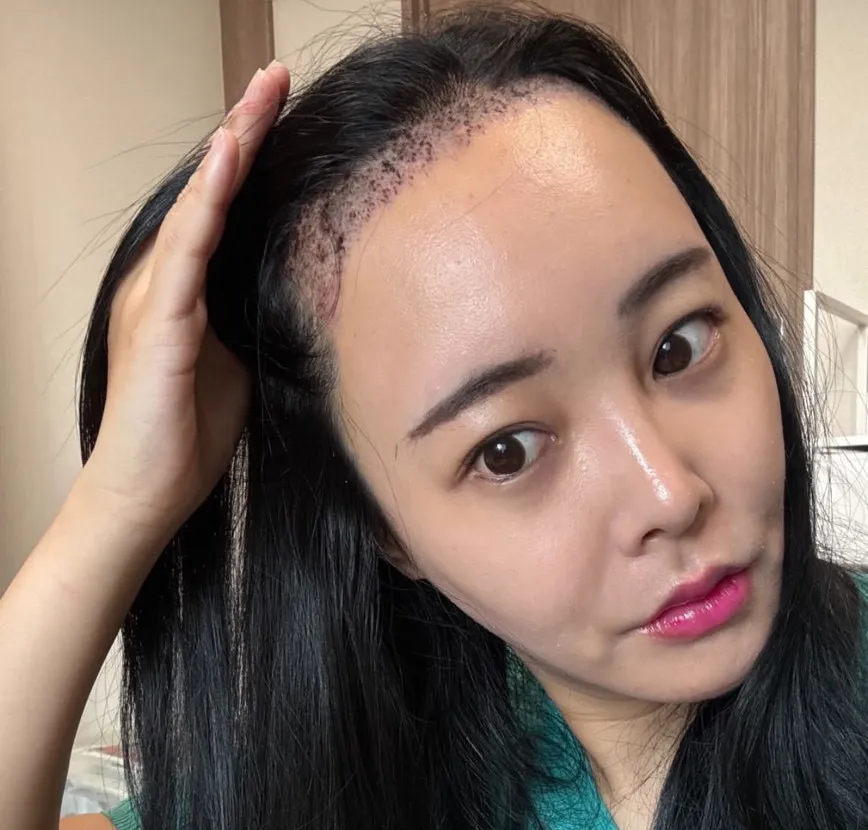
The photo sequence is not a comparison at fixed intervals. Treatment, pain, swelling, redness, hair growth, graft survival and downtime vary.
Doctors
Meet the doctors
At consultation, we assess hair loss, donor hair quantity and quality and your desired design to consider suitability and the treatment area. The treatment plan is decided after explaining limitations and risks.

Dr. Hideyuki Yamoto
Hideyuki Yamoto
- Background
- Graduated from Nagoya University School of Medicine in 2015. Founded Hair Care Clinic in 2017, focusing on hair-loss treatment and hair regeneration.
- Consultations
- We assess women’s hair-loss and hairline concerns and explain treatment suitability, any necessary tests and techniques, including hair transplantation.

Dr. Yuichiro Kizuka
Yuichiro Kizuka
- Background
- Graduated from Shimane Medical University Faculty of Medicine (now Shimane University Faculty of Medicine) in 1997. He has experience in plastic, maxillofacial and cosmetic surgery and has worked in hair transplantation.
- Priorities in hair transplantation
- We assess graft condition, hair direction, density, donor hair quality and facial balance, then plan surgery after explaining what is possible and its limitations.
- Qualifications & affiliations
- Board-certified by the Japan Society of Plastic and Reconstructive Surgery and the Japan Society of Aesthetic Surgery (JSAS); member of the Japan Society of Clinical Hair Restoration.
Video
Watch a video about hair transplantation
The video explains our approach and treatment for women’s hair transplantation. View it alongside the case and doctor information on this page when considering treatment.
Women’s hair transplantation explained
Treatment Outline
Treatment overview
| Procedure | Your own follicles are harvested from the back or sides of the head and transplanted to areas such as the hairline or crown. |
|---|---|
| Anesthesia | Local and intravenous anesthesia are used. Pain perception and recovery from anesthesia vary. |
| Estimated surgery time | Usually around six hours. A non-shaven method may take nine to ten hours. |
| Hospital stay | Day surgery. You may return home after recovery from anesthesia and assessment of your condition. |
| Harvesting methods | Shaven or non-shaven FUE. The available number of grafts and method depend on hair quantity, quality and treatment area. |
| Downtime guide | Visible changes may be noticeable for about one week; redness, unevenness and other changes may last around one month. Individual recovery varies. |
| Hair growth & final assessment | Growth may be visible from around six months, and assessing the final result takes more than one year. |
Consultation and Treatment
From consultation to treatment
After arrival, we discuss your concerns and assess your scalp, then consider a treatment plan through a medical consultation. These photographs show the clinic, explanations and clinical care.


Aftercare
Recovery timeline
Recovery varies. The following is a general guide. Contact your doctor about symptoms or changes that concern you.
Donor area protected with a bandage
Return home early after surgery. Rest on your back where possible with your pillow raised. Avoid alcohol, smoking and soaking in a bath that day.
Rest without rubbing the recipient area
Grafts take around one week to establish, so avoid impacts, rubbing and snagging. Hair washing starts the next day using the instructed method.
Transplanted hair may shed
Transplanted hairs may grow briefly and then shed. If the follicles have taken, further growth is awaited.
Temporary shedding & shock loss
Transplanted hair may shed temporarily, and surrounding existing hair may also temporarily shed (shock loss).
Growth may become visible
Transplanted hair growth may be visible. Timing and growth patterns vary.
Assessing the result
As the hair grows, the overall result can be assessed. Appearance depends on hair quality, graft survival and existing hair.
Downtime & Daily Life
Downtime & postoperative care
Visible recovery is not the same as wound healing or graft stability.
Discuss your work and daily-life plans during consultation.
- Redness & scabs
Visible changes - Redness, swelling, scabs and unevenness may occur in donor and recipient areas. Severity and recovery time vary. Being able to conceal an area with hair does not mean the scalp has healed.
- Work & outings
- Ask the doctor when you can return, based on the treatment area, postoperative condition and your work. Discuss social plans, physical work or wearing hats or helmets in advance. Appearance alone should not determine whether you can return.
- Resuming washing & exercise
- Follow the instructed timing and method for washing, using gentle water pressure without rubbing the recipient area. Follow postoperative instructions for strenuous exercise, pools, saunas, hair dye and perms. Further guidance appears under “Before and after surgery” on this page.
- Protecting transplanted hair
- Avoid impacts, rubbing or snagging, and protect the area for the period instructed by the doctor. Reduced redness alone does not establish graft stability or survival. Graft survival and growth vary and are assessed at follow-up.
Postoperative care depends on the procedure and your condition. Contact the treating clinic if you have severe pain, unexpected symptoms or are unsure when to resume activities.
Risks and Side Effects
Risks & side effects to understand before treatment
Hair transplantation is surgery. The following symptoms and complications may occur. Frequency and severity vary; not everyone experiences the same recovery.
- Postoperative pain, tenderness or headache
- Bleeding or hematoma
- Swelling of the forehead or eyelids
- Redness, itching or scabs
- Reduced or increased sensation in donor or recipient areas
- Dot-like scars, unevenness, hypertrophic scars or keloids
- Folliculitis or infection
- Temporary shedding or shock loss
- Insufficient graft survival
- Asymmetry, uneven density or unnatural hair direction
- Reduced donor-area hair volume
- Results may fall short of expectations and further treatment may be considered
Before and After Surgery
Before and after surgery
Instructions depend on the consultation, procedure and your condition. Follow the doctor’s instructions for prescribed medicines and stopping medication; do not decide on your own.
Before surgery
- Report all medicines and supplements you use in advance.
- Follow the doctor’s instructions for any medication that needs to be paused.
- Growing hair to at least 3cm is recommended to help conceal donor and recipient areas.
- Complete any necessary hair coloring by the day before surgery.
- Avoid smoking and alcohol for the instructed period.
- Remove gel nails, nail polish and artificial fingernails in advance.
- Do not use styling products on the day; wear clothing that opens at the front.
- Because anesthesia is used, do not drive yourself to the clinic by car or motorcycle.
After surgery
- You may wash your face and shower below the neck on the day, keeping the bandage dry.
- From the following day through day 6, wash with gentle water pressure without rubbing the recipient area.
- Avoid physical stimulation of the recipient area for one week.
- You will be advised to avoid alcohol and smoking for one week after surgery.
- Strenuous exercise, pools and saunas may generally resume from two weeks after surgery.
- Hair dye, perms and swimming in the sea may generally resume from one month after surgery.
- Ask the doctor if you are unsure when to resume an activity.
Treatment Cost
Women’s hair transplantation prices
Prices depend on the area, extent, graft count and harvesting method. Representative plans are shown below. For more detailed pricing and estimates including options, see the dedicated price simulator.
Face-Frame Transplant
We assess the hairline, temple recession and forehead shape, then consider a design that suits the desired area and existing hair direction.
Top-Up Volume Transplant
We examine the part, whorl and crown and assess suitability based on existing density and the extent of thinning.
Medical Scar-Cover Transplant
For scars such as a horizontal scar after forehead lift, the doctor assesses location, size and skin condition to determine suitability and graft requirements.
Part-Line Transplant
For concerns about scalp visibility along the part when hair is wet or a lack of volume. Adds density around the part. Suitability and treatment area are determined at consultation.
FAQ
FAQ
Will surgery hurt?
Local and intravenous anesthesia are used to reduce the burden during surgery. Pain perception and the effects of anesthesia vary.
Can I have treatment without shaving?
Non-shaven donor-area FUE may be an option. It takes longer and limits the number of grafts that can be harvested. The doctor determines suitability.
Will transplanted hair grow straight away?
Transplanted hair may grow briefly and shed after around one to three weeks. Further growth varies, but may become visible from around six months. Assessing the final result takes more than a year.
Can every woman have a hair transplant?
It is not suitable for everyone. Other treatments may take priority for diffuse thinning, active hair-loss conditions or insufficient donor hair.
Will my original hair increase after transplantation?
Hair transplantation relocates donor hair to a recipient area. It does not increase existing hair that has not been transplanted or stop its thinning.
Will there be scars?
FUE leaves small dot-like scars in the donor area. Hair often conceals them, but they may be noticeable with short hairstyles or depending on healing. Redness, unevenness or thickening may also remain in the recipient area.
First, we assess your hair
and scalp at consultation
Treatment for women’s hair loss depends on its cause, pattern and available donor hair. Consider treatment after receiving and understanding explanations of the procedure, fees and risks.
Book or consult via LINEAbout elective treatment
Hair transplantation is elective treatment. Results, timing of growth, graft survival, scarring and downtime vary.
- Treatment: surgical harvesting of follicles from the back or sides of the head and transplantation to the treatment area.
- Main risks and side effects: pain, bleeding, swelling, redness, itching, changes in sensation, scarring, folliculitis, infection, temporary shedding, shock loss, poor graft survival, asymmetry and uneven density.
- Cost: varies by area, graft count and harvesting method. See the price page and the explanation provided at consultation.


